
The text below was supplied by the Scoop Newsroom app. Third-party reporting is attributed in the source panel.
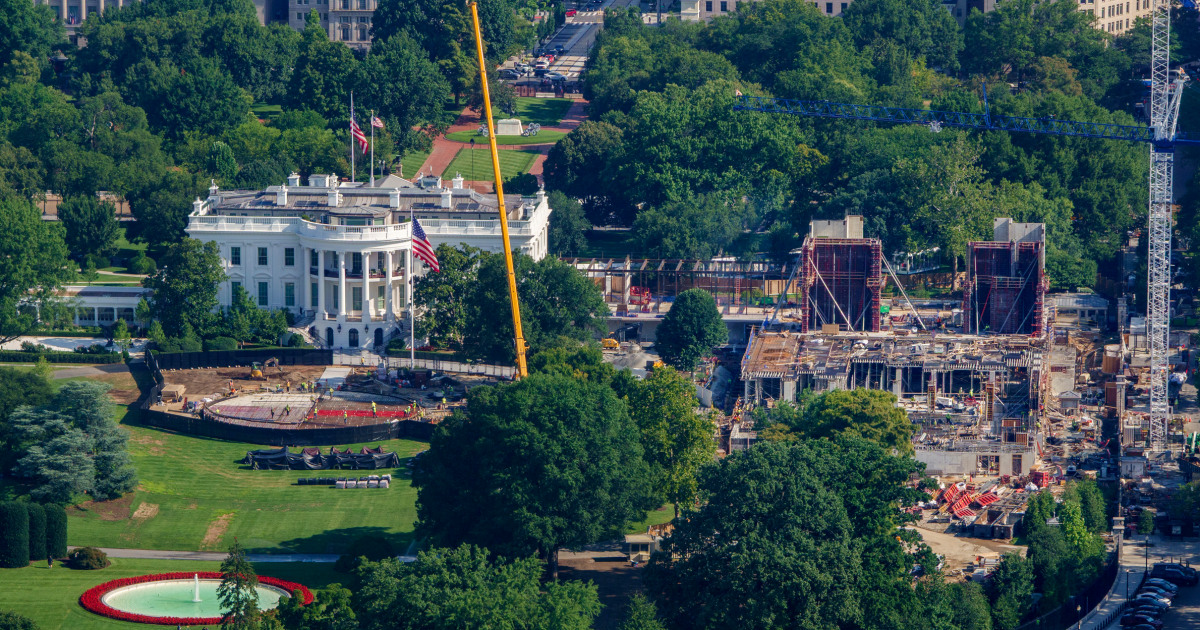
Brent Leggs, president of the plaintiff organization, the National Trust for Historic Preservation, praised the ruling in a statement, saying it shows the “White House, a global landmark that symbolizes American identity and the ideals of democracy, belongs to the American people.” The appeals court’s ruling found that whether “a massive ballroom should be constructed is for Congress to decide and is not a matter for Executive self-help.” That’s because the “Constitution assigns Congress — not the Executive — the responsibility to decide whether proposed changes to the physical design of the White House may proceed, even where those changes are said to serve security interests,” it said. “Each President is a temporary tenant, not the owner, of the White House and its Executive Residence,” the ruling said. “The President has no — and claims no — constitutionally assigned authority over that property.” The ruling paints the current administration as completely ignoring those restrictions. “Over just three days in October 2025, without undertaking promised consultations or obtaining Congress’s permission, President Trump bulldozed the entire East Wing in order to construct a massive, 90,000 square-foot ballroom paid for by private funds with no congressional oversight,” it said. Rao argued Leon’s ruling was an “overreach” because the Trust didn’t have standing to sue and the ballroom is “likely within the President’s authority to make improvements to the Executive Residence at the White House.” The majority disagreed on both counts and signed off on Leon’s order halting the ballroom construction while allowing building to continue on “below-ground construction, including construction of bunkers, bomb-shelters, and military and medical infrastructure, as well as above-ground construction ‘strictly necessary to cover, secure, and protect’ such facilities.” They also said the administration directly caused some of the security concerns and delays it is now complaining about, writing that “any risk caused by the construction project and its multi-year timetable is overwhelmingly a problem of the Defendants’ own creation.” “The Defendants unilaterally and likely without lawful authority destroyed a large portion of the White House structure and dug an open pit in its place,” they wrote. “Then, after commencing a lengthy construction project, they publicly announced to the world the vulnerabilities that self-chosen endeavor has created.” “While this court accords great weight and deference to invocations of national security and the safety of the President, such arguments are not an automatic get-out-of-law-free card,” they wrote.
Breaking news moves fast. Follow @Will466513 on X for breaking news alerts. Follow on X →