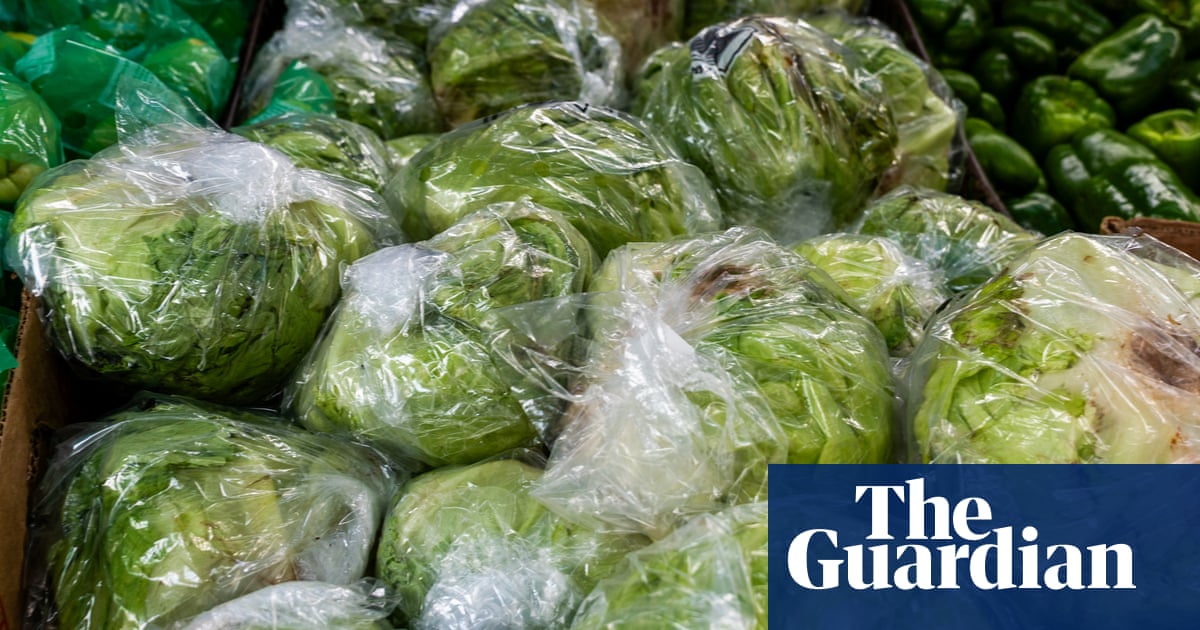
US law to investigate foodborne illness outbreaks has been delayed for 15 years
Law was set to go into effect in January, months before cyclosporiasis outbreak, but now is set for 2028 Congress passed a law to help federal agencies investigate outbreaks of foodborne illness – a regulation experts said could have stopped the US’s largest cyclosporiasis outbreak much sooner. The rule has been delayed – for 15 years, including most recently amid lobbying in 2025. It was set to go into effect in January 2026 , months before the single-celled parasite sickened more than 24,000 people and killed two in the midwest. The regulation requires enhanced record-keeping for high-risk foods – namely, those which have a history of making people sick, such as soft cheese, leafy greens, eggs and peanut butter – “for persons who manufacture, process, pack, or hold foods”. The promise of the traceability rule is to allow the FDA to more quickly and accurately pinpoint where tainted food came from, all the way down to the farm.
The text below was supplied by the Scoop Newsroom app. Third-party reporting is attributed in the source panel.
Those could be coming from completely different sources and then are all packaged up.” The current tracking system in the US derives from the Bioterrorism Act of 2003, according to Jennifer McEntire, founder of the food safety consulting firm Food Strategy. And that was a loophole that was closed through the Bioterrorism Act,” said McEntire.