
The text below was supplied by the Scoop Newsroom app. Third-party reporting is attributed in the source panel.
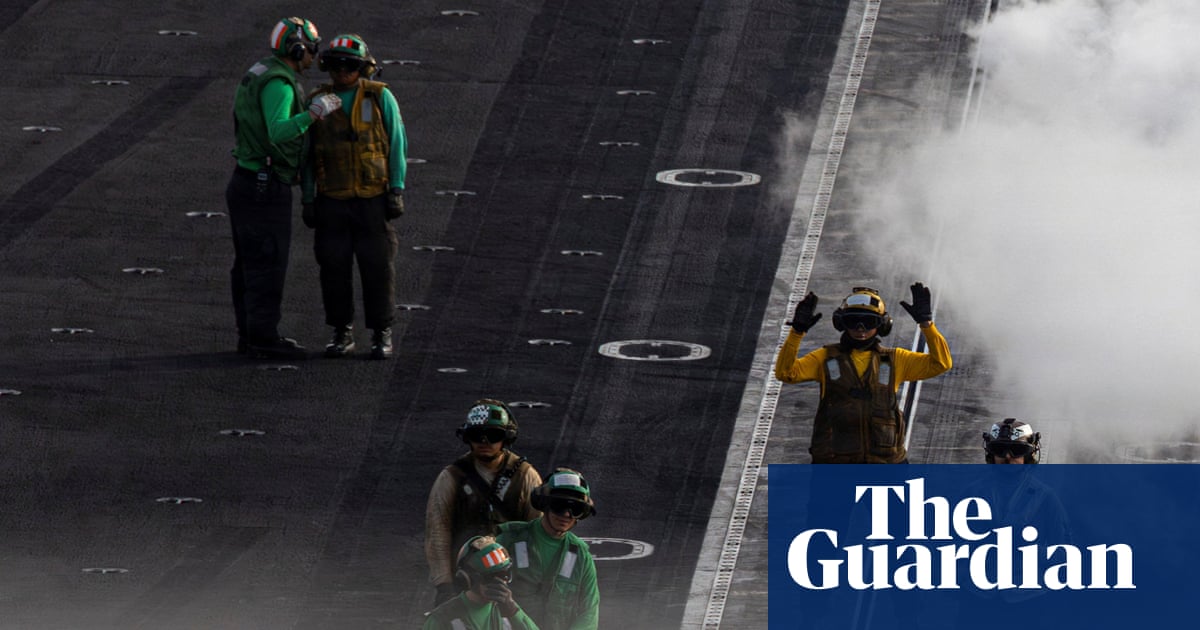
Nancy Lacore, a three-star navy rear admiral who served in the navy for 35 years, said in a statement that during her first deployment, she was “operating in that same region as the USS Abraham Lincoln”. “Just like those sailors, when we left our home port on deployment, we knew when we were supposed to come home,” said Lacore, who was ousted by Hegseth in August during his purge of senior US military officials and who is now running for Congress in South Carolina. “We had an end date, and we were counting down to it.” “Then something changed in the region and just as we thought we were heading home, our ship turned around and went back to the Gulf,” she said. “I still remember how mentally crushing it was to realize the date you’ve been holding onto is gone.” People aboard the Lincoln, she said, have “experienced that uncertainty repeatedly”. “Our Sailors are tough and resilient,” she added. “But their resilience shouldn’t be taken for granted or used as an excuse to keep asking more of them without a clear end in sight.” Terri Tanielian, a senior behavioral scientist who has studied deployments and their impact on troops and families, said that prolonged separations are difficult, but that uncertainty over when a deployment will end can make the strain worse. The official recognized that the war had disrupted traditional supply hubs, but added that “current reports from the ship confirm continuous access to clean water, functional AC and healthy meal options”.
Breaking news moves fast. Follow @Will466513 on X for breaking news alerts. Follow on X →