‘What happens if we do die?’: Congress still stalled on continuity plan after 9/11
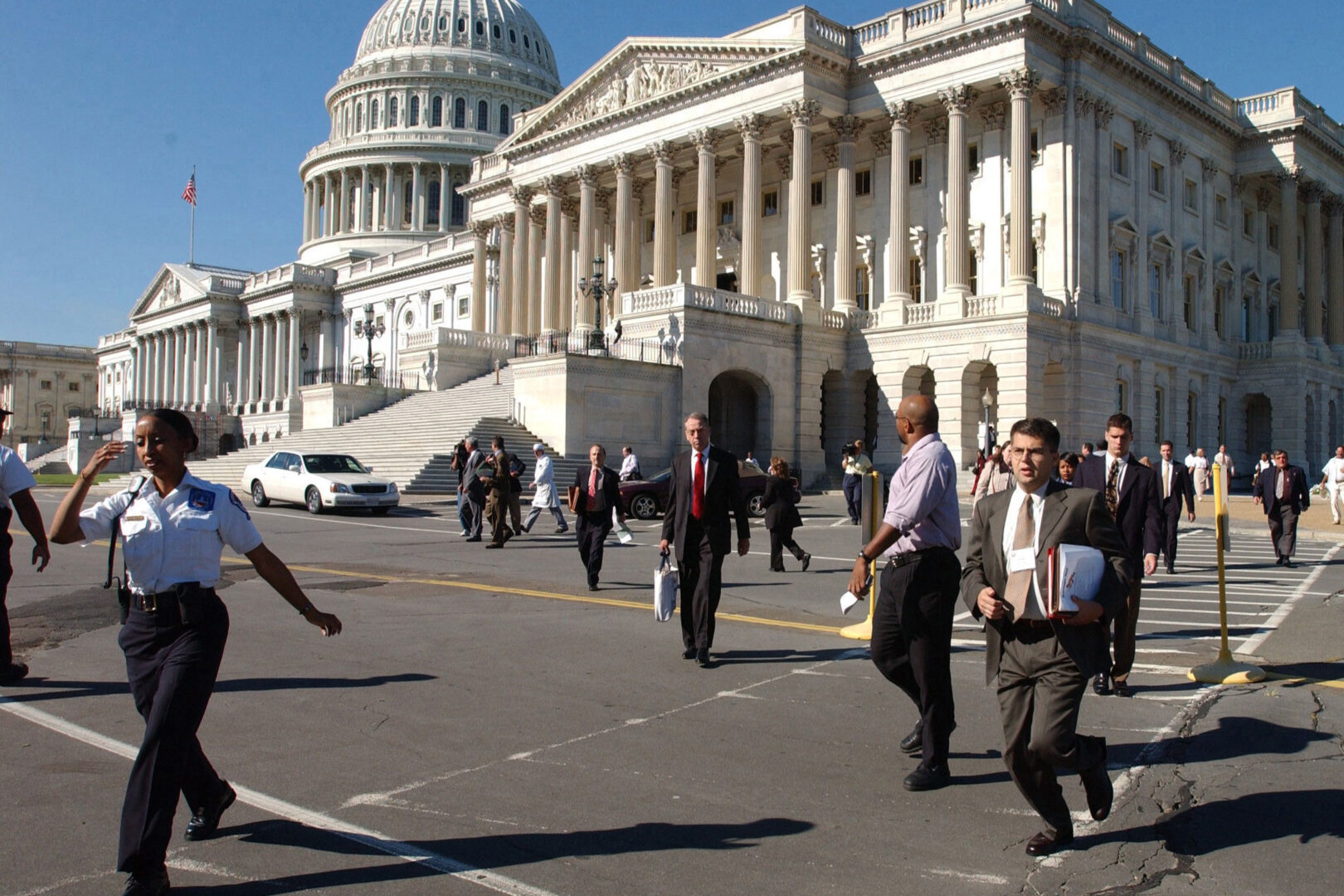
Brian Baird has spent a lot of time thinking about death over the last 25 years. Not just his own, but also his former House colleagues’. Making his way through the Longworth House Office Building on 9/11 and urging people to evacuate after seeing smoke rising from the Pentagon out of his seventh-floor window, Baird was struck by the question that still haunts him. “I’m running through the building, evacuating people, wondering if we’re going to die in the next few minutes,” he said in an interview this month. “As I’m in the middle of that, saying, ‘What happens if we do die?’ Not in some personal, existential way, but really — what provisions exist to keep the Congress functioning if a lot of people are killed?” Baird, a Democrat from Washington state who left Congress in 2011, went home that night, reread the Constitution and began his research. What he learned was if many lawmakers were killed in a catastrophe, Congress could be incapacitated, too. That process can last for months, leaving constituents without representation.
Scoop News DeskSpecific city/county not stated, Washington · Published Updated
Media link supplied by the Scoop Newsroom app.
Scoop News reporting summary
The text below was supplied by the Scoop Newsroom app. Third-party reporting is attributed in the source panel.
But Congress is still unprepared for the aftermath of a mass casualty event, according to Baird and others. “If United 93 … had left on time — it was headed for the Capitol — we would have had an almost fully loaded jet plane hitting the cast iron dome when there were lots of members around.
Dated changes to this report are shown here as they are published.
Version 2unpublished
Removed by Scoop Timeline eligibility policy
Version 3published
Brian Baird has spent a lot of time thinking about death over the last 25 years. Not just his own, but also his former House colleagues’. Making his way through the Longworth House Office Building on 9/11 and urging people to evacuate after seeing smoke rising from the Pentagon out of his seventh-floor window, Baird was struck by the question that still haunts him. “I’m running through the building, evacuating people, wondering if we’re going to die in the next few minutes,” he said in an interview this month. “As I’m in the middle of that, saying, ‘What happens if we do die?’ Not in some personal, existential way, but really — what provisions exist to keep the Congress functioning if a lot of people are killed?” Baird, a Democrat from Washington state who left Congress in 2011, went home that night, reread the Constitution and began his research. What he learned was if many lawmakers were killed in a catastrophe, Congress could be incapacitated, too. That process can last for months, leaving constituents without representation.
Version 4unpublished
Removed by Scoop Timeline eligibility policy
Version 5published
Brian Baird has spent a lot of time thinking about death over the last 25 years. Not just his own, but also his former House colleagues’. Making his way through the Longworth House Office Building on 9/11 and urging people to evacuate after seeing smoke rising from the Pentagon out of his seventh-floor window, Baird was struck by the question that still haunts him. “I’m running through the building, evacuating people, wondering if we’re going to die in the next few minutes,” he said in an interview this month. “As I’m in the middle of that, saying, ‘What happens if we do die?’ Not in some personal, existential way, but really — what provisions exist to keep the Congress functioning if a lot of people are killed?” Baird, a Democrat from Washington state who left Congress in 2011, went home that night, reread the Constitution and began his research. What he learned was if many lawmakers were killed in a catastrophe, Congress could be incapacitated, too. That process can last for months, leaving constituents without representation.
Version 6unpublished
Removed by Scoop Timeline eligibility policy
Version 7published
Brian Baird has spent a lot of time thinking about death over the last 25 years. Not just his own, but also his former House colleagues’. Making his way through the Longworth House Office Building on 9/11 and urging people to evacuate after seeing smoke rising from the Pentagon out of his seventh-floor window, Baird was struck by the question that still haunts him. “I’m running through the building, evacuating people, wondering if we’re going to die in the next few minutes,” he said in an interview this month. “As I’m in the middle of that, saying, ‘What happens if we do die?’ Not in some personal, existential way, but really — what provisions exist to keep the Congress functioning if a lot of people are killed?” Baird, a Democrat from Washington state who left Congress in 2011, went home that night, reread the Constitution and began his research. What he learned was if many lawmakers were killed in a catastrophe, Congress could be incapacitated, too. That process can last for months, leaving constituents without representation.